
Tamarind is an absolute must-try fruit! Having grown up in Antigua, I have fond memories of indulging in this tropical fruit. Picture this: plucking the tamarind directly from the tree, cracking open its shell, and savoring the perfect balance of sweet and tangy flavors. Some varieties can be sour, while others offer a subtle hint of sweetness. Personally, I absolutely love it. Allow me to share with you a recipe that transported me back to the blissful days of my childhood.
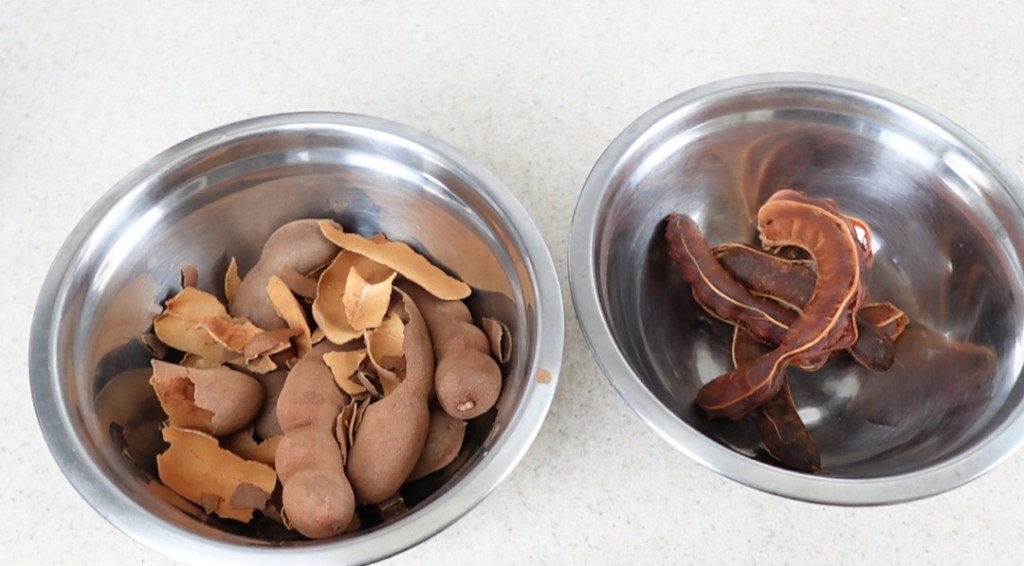
Not only did I grow up with the privilege of eating this fruit fresh from the tree, but I was also able to enjoy tamarinds as a stew (which we had as treats while at school), as a confection we called tamarind balls and a very refreshing drink. Across different cultures, tamarind finds its place in a wide array of cuisines by adding flavours to dishes and sauces. You just have to let your creativity soar and explore the possibilities of this fruit.
What You’ll Need
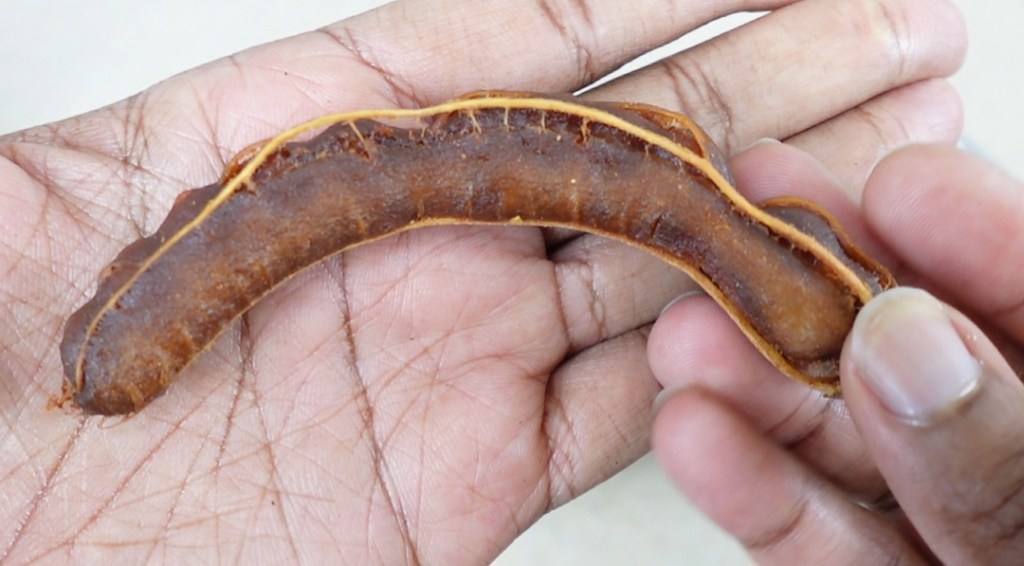
- 220g Tamarind pods (weight once shells were removed)
- 200g or about 1 1/2 cups Sugar (this is to taste, I used the entire amount)
- 2000g or 2L Water (you may want to use more see notes)
- 1 Cinnamon stick
- 2 cloves
- 1/4 tsp citric acid or 1/4 of a Lime (start with 1/4 of a lime first)
How To Make It
- Break tamarind pods to remove the outer shell and place them in a pot
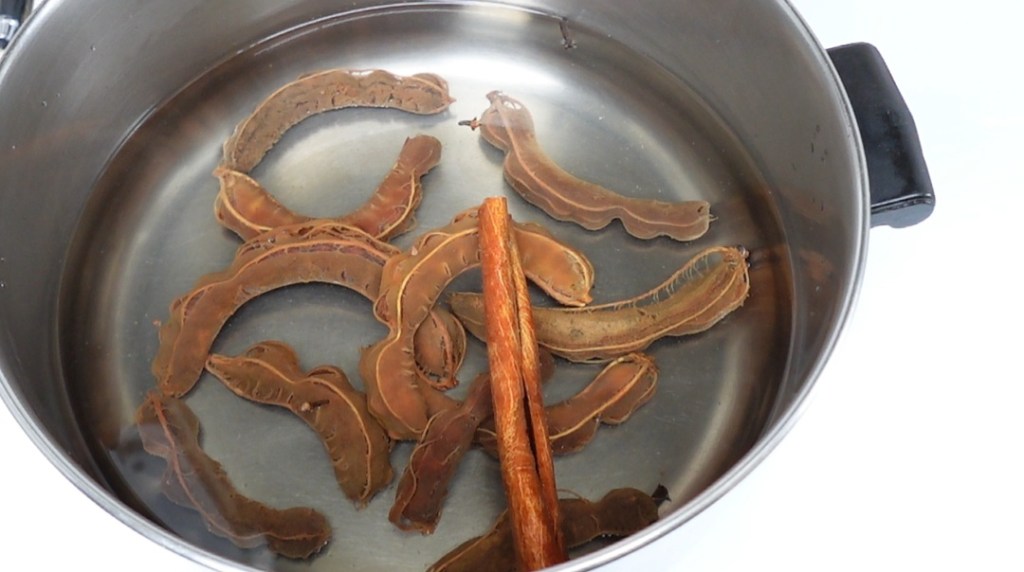
- Add water, cloves, and a cinnamon stick to the pot. Use medium to low heat (between 3-4)
- Bring mixture to a boil and stir occasionally
- Boil the mixture for 30 minutes, then remove from heat and let the mixture seep.
- The mixture can be left overnight for a deeper tamarind flavour (Optional)
- Once the mixture has cooled, strain to remove pulp and any shell shards.
- Once strained, sweeten the drink, here is where you may add the citric acid/lime and additional water (if the mixture is too concentrated)

Things To Note
- After the mixture has boiled, it can become super concentrated, so adjust to add more water to the mixture. This is a personal choice as everyone likes their drinks differently. I used 2L but added about 1l after the drink was made to dilute it.
- Sugar should be added to taste. This depends on the amount of water used. Sweeten to taste! You do not want an overly sweet drink.
- If you are only able to purchase sweet tamarinds, add citric acid 1/4 tsp at a time. There should be a tangy taste to the drink (think lemonade). You want a perfect blend of sweet and tangy. Of course, this is all to taste, so if you want a more tangy drink, adjust accordingly.
- If you do not have citric acid, you can use LIME juice. It is more acidic than lemon and will give you the added tangy flavour needed. Use 1/4 of the lime to start, and adjust accordingly.
- Once you have strained your cooled liquid, save the pulp so you can create tamarind stew. It’s an added bonus.

Over the last few weeks, I embarked on a journey down memory lane and attempted to recreate cherished childhood memories one could say I was healing my inner child. I was pleasantly surprised when I stumbled upon tamarind at my local Asian grocer so I got to experimenting. While it may not be the same as picking the fruit directly from the tree, the store-bought alternative allowed me to relive my childhood. It was an experience that truly filled my heart with happiness!
What are some of your favourtite drinks from childhood?





 Soft Pastels Life
Leave a comment